

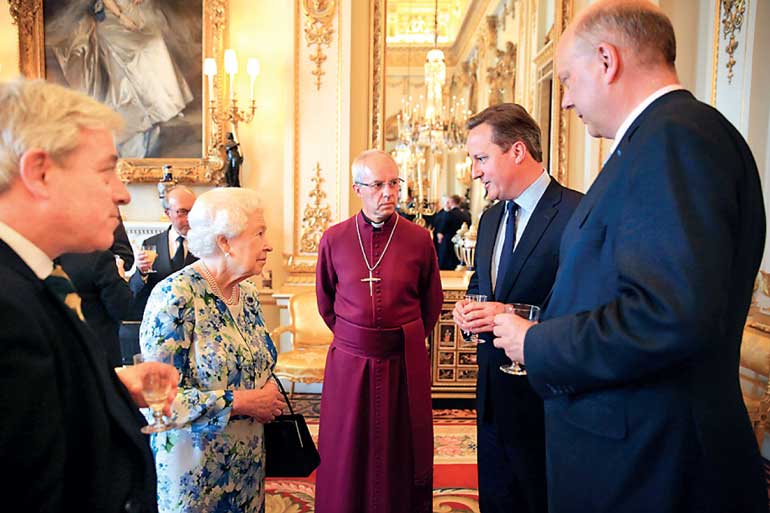
The London 2016 Global Anticorruption Summit (GAS) may have supplied practitioners of the classic island defence of retreating to the high moral ground when under attack with fresh inspiration and ammunition to ward off hostile media trying corruption cases in the press
These days, I can’t pick up a paper without spotting the C word. At home, the government is turning the screws on allegedly corrupt officials of the previous administration. Abroad, the ostensibly least corrupt countries are hosting anticorruption summits. Online – in that far country called Facebook – social media hacktivists debrief gobsmacked global citizens about the most corrupt countries in the developed world. Corruption is the new Kim Kardashian. It’s breaking the internet.
Abroad
Tumescent interest in the matter at hand – C, not KK – had its most recent renascence in the ostensibly least corrupt country in the world: the UK. Under-fire British premier David Cameron decided to host a global anticorruption summit. The timing of the highfalutin confab didn’t go unnoticed or uncommented on by cynics planet-wide. That Britain’s PM opted to fight the fire of criticism with the fire of consolidation didn’t surprise them in the least, given how much Cameron had been under the microscope since Mossack-Fonseca’s files were leaked.
So the international conference in London last month was widely perceived as a deliberate ploy by a bankrupt Tory party leadership to try and gain a firmer footing on higher moral ground and stave off pointed commentary. An alleged scoop, in which the Prime Minister – flanked by the Queen and the Archbishop of Canterbury among other sea-green incorruptibles – dropped a brick about a brace of African states being among the most corrupt nations in the world, was probably part of the managed spectacle. Its evident aim was to shift the media’s unforgiving gaze away from Panama Papers- and Brexit-embroiled Britain to the Global South, where everyone thinks all the corruption is.
A far country – or 18 of ’em
These northern shenanigans were much on my mind when the eye glanced at one of those pictorially padded up reports on the web’s many buzz-feed-type sites. Sorry to disappoint you, Mr Cameron, but this particular survey wasn’t one commissioned by a bunch of cowboys sitting in clover, in air-conditioned comfort in some luxurious insulated suite, while corrupt Africans and Middle Easterners got down to backsheesh under a scorching sun; but rather by Transparency International and reported by no less than Business Insider. The pure and simple surprise (oh, all right, I exaggerate: corruption is rarely pure and never simple) was that – God or David forbid! – the big C does raise its ugly head in the Global North, too!
Most surprising was Ireland being on the list of the 18 most corrupt countries in the OECD, as well as Israel (oh, well, it is among the poorest states in the developed world), together with Spain, Portugal, Italy, and Turkey, which hardly constituted a surprise. Southern climes and corrupt slimes seem closely linked? Be that as it may. It seems that weak legal and governmental controls alone are not the conclusive factors in the corruption-perception equation. For one thing, TI’s annual index is an admixture of elusive airy concepts and grassroots-grounded surveys; with corruption – secret and secretive as it is – being beneath the radar of empirical evidence looking anything like proof.
For another, corruption is defined more stringently and painstakingly in countries and among societies where it is taken more seriously. Japan being in the list of 18 proves that point, although (or because) its particular form of corruption is not so much graft and greed but a traditional greasing of the wheels (not palms) to show respect to retiring government officials in getting things done.
At home
Talking about retiring government officials… the Governor of the Central Bank is about due to hang up his boots in the month of brides, as they say. Whether he is refereed back on to the field by his grooms, so to speak, is a moot point – though if he is invited to take another crack at the safe (no pun intended) as houses business of central banking, it might also be the tipping-point that sends Good Government over the edge of reasonable pragmatism into perfidious realpolitik.
Although the governmental engine has given him the green light, it is the chief executive who signs a putative renewal – and that worthy has already made his feelings on the alleged scams clear. Even if the President has been compelled by good sense, pragmatism and/or common goals to hold his piece, continuing to act as if transparency and accountability are precepts to be honoured by one’s political opposition but cavalierly bulldozed over by one’s blue-eyed boys could be the straw that breaks the camel’s bank.