

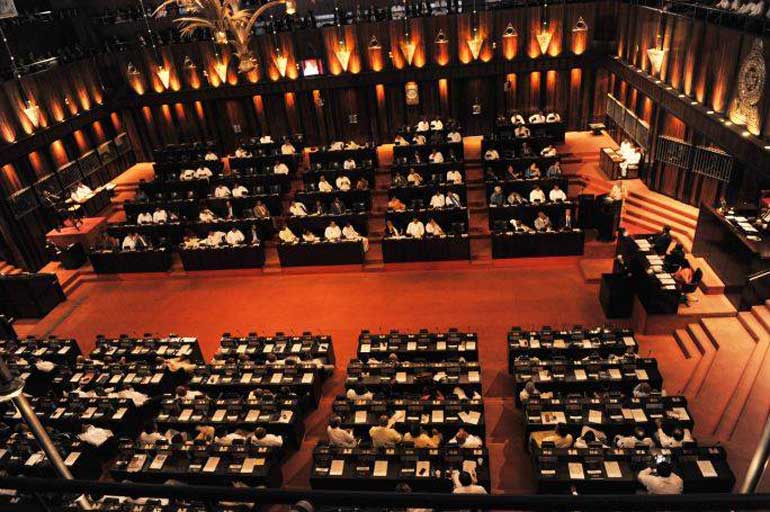
What has come to pass in the Republic in the name of constitutional game-changing cannot be allowed to pass – to pass into time past by default, and opportunities bypassed by design – without rigorous engagement
When the would-be reformers of our previously highly politicised civilisation mooted the need for a new political culture, there was a great stirring in the force. Our young men saw visions, and your older folks dreamed dreams. We thought and felt and hoped that government would undergo a sea-change into something rich and strange. (And nicer.) We were arguably and demonstrably mistaken about the nature and the extent of the intended national political transformation. (And naive.)
You wanted a new mind, a new heart, a new spirit, among our elected representatives and the fresh-faced mandarins whom they would in turn appoint to serve us their electors. They needed a new mandate, a new hype, a new strategy, to appoint their own representatives and remnants from the time of the Old Master to service their own agendas. That’s what Machiavelli might describe with mounting enthusiasm as a gull or a fait accompli, or what a card sharp would call with undisguised admiration a finesse or a red herring with the joker in spades.
I may name names, and say that there is a certain inbuilt inevitability in the decline and fall of the romantic thought-empires that Ranil and his technocratic stalwarts were building. Much like the collapse of castles in the air, when the hot air escapes the atmosphere into outer space and the balloon goes up briefly. But it falls limply back to earth in the face of the first cold front of parliamentary-seat opposition and/or cabinet-post opportunism that sees rogues – the usual suspects, that band of robber barons and two-bit thugs and alleged drug-lords – make it back not only into the House, but rifle through the highly-prized Cabinet too.
M. Karr (not the well-known local hotelier, but that fancy philosopher of France, Alphonse: a journalist and critic like yours truly, your favourite columnist) might have said, “Plus ça change, plus c’est la même chose.” Which, roughly translated from the French, reads: “The b*st*rds screwed us again.” Or, if you insist on the rather more classical allusion: “The more governments change, the more they chose the same lame b*gg*rs.”
There, I’ve said it. Twice. Which is just about as many times as you and I, dear readers of this rag (roughly translated: “esteemed journal”) have been screwed over by governors with good intentions. First, these knights in slightly tarnished armour waged war on the cruel, crooked, corrupt armies of the Rajapaksa regime – on their cronies, friends, families; Uncle Tom Cobbleigh and all – and called it a crusade.
We willingly fought in that war, that Hundred Days War, you and I who had had it up to *here* with the most cynical and dangerous of regimes our blessed isle had known. It was an autocratic democracy that both bothered us strangely (because they were good at getting some things right sometimes). It was a constitutional dictatorship that benighted us sorely (because they were bad at doing the right thing most of the time).
Then these erstwhile paragons of virtue just made peace with the enemy – all but one: the Old Master Manipulator, who is left to lament and anoint himself with dust and ashes; a veritable Job without the job he craved and desecrated – and soon there was nothing much to distinguish the victors from the vanquished. It wasn’t a just peace. It was just peace with a bucket-load of bull-dust. But seeing is believing until the architects of the pending ‘Third Republican Constitution’ share their vision with us more honestly, openly, transparently, and perhaps most importantly, effectively.
Sorry, dears, about the splenetic outburst. But it has been a rough translation, indeed, from then envisioning enthusiastically as to what the New Republic in three months or so would look and be like… to now day-dreaming desperately about how Good Governance could redeem the day past today, and how it should strive harder tomorrow to take the opportunity for transforming our nation-state. An opportunity that is passing into oblivion with every Cabinet meeting.
For what has come to pass in the Republic in the name of constitutional game-changing cannot be allowed to pass – to pass into time past by default, and opportunities bypassed by design – without rigorous engagement. At least not without venting some spleen in the general direction of the ranks of Tuscany, most of whom are suddenly cheering the New Deal or New Political Culture until they are hoarse. Because we can see that the sea-green incorruptibles have chosen to, or have been compelled to, see themselves as those poor parliamentary fish without choice; compelled to make a Mephistophelean bargain with the very devil, so that their precious understanding of democracy might survive. A democratic-republicanism that has foisted on us not only a fresh Parliament of Fowls but a Political Foulness of paltry, putrid, parliamentarianism that will breed more than chicken-sh*t culture for the Republic. Already, the droppings from this New Political Culture are begging the question as to what comprises and composes our rapidly decomposing republican life…
Ergo, the problem with any culture is that there are living beings in it. The cleaner the culture it is, the fewer the pathogens. Possibly. If it is a true culture, however, in the sense of being a zoo or a zoon with its own biodiversity, there will inevitably be creeping, crawling, creatures to be seen swimming in it. In this context, let us try and discern, and cull, some nicer, but not necessarily finer, points about our New Political Culture and the flora and fauna that inhabit its biosphere.
Now it may be that the more sterling representatives of Good Governance won’t be pleased at our lumping them into the same cauldron as their less savoury peers. But that is a choice that they themselves have made, or allowed themselves to be compelled to make. Call it need, necessity, or any other nice word that doesn’t make them feel naughty or nasty (As victors, they get to write history and how posterity is presently being shaped). And if the carping and cavilling of the proletariat is not to their liking, they can jolly well lump it (As voters – also known now as the vanquished – that is our privilege. Although it seems like a low priority for the lumpenproletariat)! At least the proles might quibble on three grounds.
A.The irrational alignment of otherwise reasonable ministries (e.g. Buddha Sasana AND Justice; Tourism Development AND Christian Religious Affairs; Posts, Postal Services, AND Muslim Religious Affairs; Rehabilitation, Resettlement, AND Hindu Religious Affairs; Sustainable Development AND Wildlife; University Education AND Highways; Parliamentary Reforms AND Media – need I go on?).
B.The unreasonable creation of ostensibly irrelevant ministries (National Dialogue, whatever that means – on top of National Integration – in addition to Rehabilitation and Resettlement: Cabinet, and Rehabilitation and Reconciliation: State. Urban Planning and Water Supply: Cabinet – on top of Irrigation and Water Management: Cabinet – on top of Irrigation and Water Resources: State – on top of Water Supply: State … “water, water, everywhere; nor any drop to drink”?
C.The irritating assignment of ordinary minions to Cabinet, State, and Deputy Ministerships (an alleged mass-scale deforester and aggressive defender of his rights to Industries and Commerce; a public brawler to Sports – not entirely inappropriate, perhaps; an unknown to State Law and Order – now once again, maybe ideal; a thug or stevedore to Ports & Shipping; a home-made self-made mafioso to Home Affairs).
Despite our fond hopes fading fast, there might still be some merit in engaging with some of the realities that the penchant for realpolitik of The Powers That Be have foisted on us. And their proclivity to pragmatic politics as a first step towards consolidating this “basket-case democracy” (as one commentator calls it) notwithstanding, there may still be some space for idealists and strategists among more noble policymakers to essay and effect a real change in the midst of the more plebeian thrusts and parries of a House of Pretenders.
Vested interests (viz. the ‘business of politics’ is often no more than the ‘politics of business’) and hidden agendas (i.e. reform: not to strengthen the nation-state or republic, but to safeguard the now incumbent ambipartisan regime) aside, there is value in openness and transparency about the rottenness that has come to be rank and rife in the pit of Parliament. Dare we hope that proletarian disgust and disapprobation (and I don’t mean the well-directed and well-deserved venom of the JVP, that de facto Opposition, alone) will stir the hearts and deter the mindful cleansers of Augean Stables among the premier partners and front rowers and backbenchers alike of Good Governance. Read what’s below, ye angels above, and weep…