

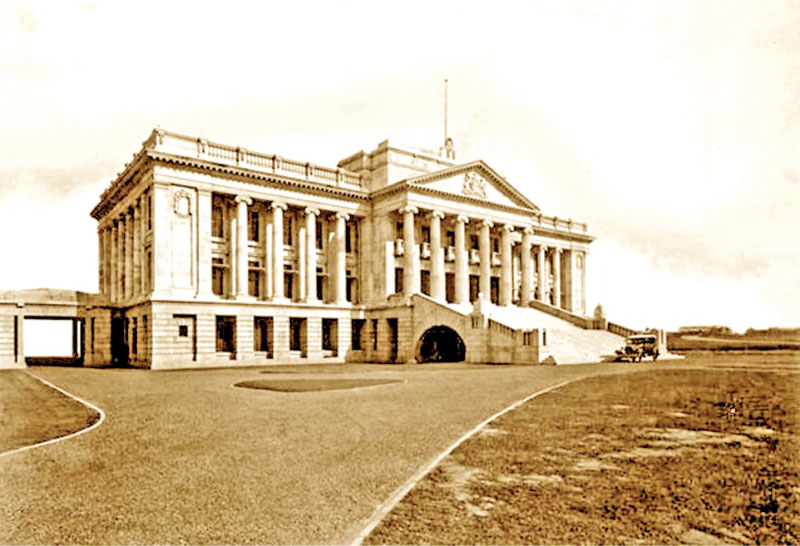
The State Council was to consist of 58 members, of whom 50 would be elected by universal suffrage, and the remaining eight were to be appointed by the then Governor of British Ceylon
On the 77th anniversary of Sri Lanka’s independence from colonial rule, following foreign domination of some four and a half centuries, the focus may well be on liberty from oppression or tyranny, and sundry freedoms in the sociopolitical and economic spheres.
But the right to chart one’s course as a sovereign nation state had a deeper anchorage in the case of the once model crown colony of Ceylon. And the granting of suffrage – in a restricted quantum at first, and then universally for adults – played a significant role in the emergence and development of our country’s polity as it is today.
In the first part of an article on some of the elements leading up to the strategic grafting of universal adult franchise onto the ethos of colonial Ceylon, following the Donoughmore reforms of 1931, we look at how the first foundations for eventual full independence were laid.
That is a tale of gift, grant, and a gentler-than-elsewhere raft of agitations against a long-standing empire on its last legs…
State and Legislative Councils
It is a story that begins with the first election to the State Council of Ceylon, the island’s then legislature, which was held from 13 to 20 June 1931. This was the inaugural such event in a British colony which aspired to universal adult franchise.
It took place in 1931, when the outworking of the Donoughmore Constitution replaced the Legislative Council of Ceylon with the State of Council of Ceylon as the legislature of the then British Ceylon.
The Legislative Council of Ceylon had been the colony’s legislative body, which had been established in 1833, together with the Executive Council of Ceylon, on the recommendations of the Colebrook-Cameron Commission of 1833, and was the first representative form of government in the British-ruled island.
Established on 13 March 1833, it was disbanded in 1931, and was succeeded by the State Council of Ceylon. During its existence, the Legislative Council had seats to the number of 15 (1833-1889), 18 (1889-1910), 21 (1910-1920), 37 (1920-1923) and 49 (1923-1931) respectively, in the corresponding years. This represented an increasing number, though not necessarily an enhanced agency, of the native population – or instrumentality for all demographics in British Ceylon at the time.